
Kona, From the Inside

Kona, From the Inside
What racing Kona actually feels like, mile by mile, and what to do about it. From a pro who raced it, and two coaches who have lived it, for every age grouper standing on that pier on October 10.
A letter from Angela
I've stood on that pier twice as a pro. The first time, in 2015, I started the race with a broken foot and didn't even know it. My day ended before the run. The second time, in 2018, I finished eighth in 8:57.
I grew up in Prince George, B.C. I ran track in college and used to ride my mountain bike to practice. I became a physiotherapist, then quit my job in 2008 and moved to California with about $2,000 and a dream, living in a trailer on a friend's land in the desert. Injuries and a qualifying-points shortfall pushed my first Kona back year after year, until 2015. So I know what it means to you to be standing on it.
Kona isn't just a race for me. I've spent many years training on the Big Island, three to four weeks at a time. I know where the wind hits on the Queen K, which mornings the bay is glassy, and how different that highway feels at 7 am and at 2 pm. A lot of what's in here I learned on those training blocks, not on race day.
In 2018 I got to Kona a week early. I wasn't chasing anything fancy. I was grateful to be healthy and happy, and I said two words to myself all day long: be strong. Crossing that finish line was the best feeling I've ever had racing.
Every guide will tell you where the aid stations are. This one tells you what it feels like. The quiet climb at mile 77 when the wind drops and the heat lands on you. Why the airport lies to you. What goes on in your head in the Energy Lab. Holly, Liz and I have raced long, coached long and watched our athletes suffer and shine on this island. This is what we tell them.
Read it twice before race week. On race morning, read nothing. You'll already know.
— Angela
Who's behind this
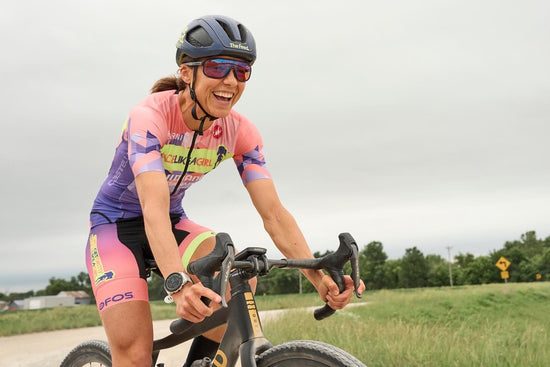
Angela Naeth
Founder and head coach. Pro since 2009. Raced Kona in 2015 and 2018 (8th, 8:57) and the 2022 World Championship. Three sub-9 IRONMAN wins, 19 IRONMAN 70.3 titles, and a physiotherapist by training.
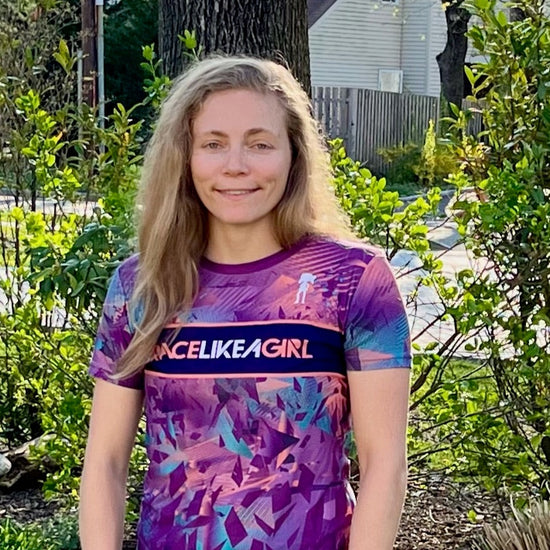
Holly Koksel (Goodman)
Went from her first 5K in 2009 to IRONMAN and ultramarathons. Multiple IRONMAN World Championship qualifications, ultra podiums, USAT All-American.
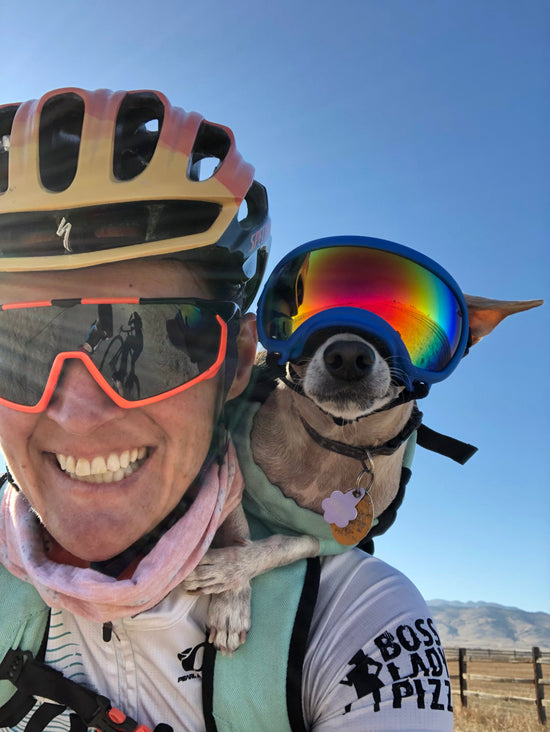
Elizabeth (Liz) Flaherty
Found triathlon as a US Air Force officer, racing alongside a career in spacecraft operations. Ten full-distance IRONMANs, plus XTERRA and mountain biking.
My Kona story
Eighth, on the fastest day Kona had ever seen.
| Swim | T1 | Bike | T2 | Run | Finish |
|---|---|---|---|---|---|
| 58:27 | 2:52 | 4:42:26 | 2:39 | 3:11:13 | 8:57, 8th |
The road to the pier
My first IRONMAN win was Chattanooga in 2014. That year I also won IRONMAN 70.3 Hawaii, Honu, on the Big Island, so I'd already raced in that heat and wind. In May 2015 I won the IRONMAN North American Championship in Texas in 8:55. That was my Kona ticket.
2015: the day that didn't happen
I stood on the pier in 2015 with a broken foot and had no idea. I knew something didn't feel right in the build, but I put it down to the normal aches of Ironman training. I swam, I rode, and I never made it onto the run. Only afterwards did I find out the foot was broken.
I'm not going to dress that up. What it taught me is that you can do everything right for years and Kona can still say not today. It also taught me to listen to my body, and to get the niggle checked instead of hoping it goes away. I flew home disappointed, but I learned to respect this island and to never take a start line for granted. When I came back in 2018, I wasn't there to prove anything. I was there to race, and to enjoy it.
2018: grateful, happy, strong
I almost didn't make the start list that year. I got in late. I landed a week early, and I was simply grateful to be healthy and happy on that island.
The swim. I've always been a stronger rider than swimmer, so my goal in the water was simple: stay calm, find feet, and get out ready to ride. I came out in 58:27. Floating at the start, I took a moment to look back at the crowds on the seawall and just breathe. Out to the boat felt quick. The long line home felt longer, the way it always does, and that's where I focused on swimming straight and not wasting anything. The swim isn't where Kona is won. It's where it can be lost if you panic.
The bike. I rode my plan and I raced it, and I used the winds to my advantage. I came into T2 fifth, about 17 minutes behind the leader. It was a rare calm year. Ten women broke nine hours that day, when no Kona before had seen more than two. Fast days are fast for everyone, so you still race your effort, not the clock.
The run. Aliʻi was hard. The crowds make you want to go. I held back. Palani I respected. In the Energy Lab I broke it into chunks: to the turn, to personal needs, to the exit. There's no wind coming out of there. After the Lab, Corinne Abraham caught up and we ran together. She finished right behind me in ninth. Sometimes the person beside you is the best thing that happens to your day.
The finish. I said be strong on every climb, every aid station, every mile. Crossing that line was the best feeling I've ever had racing.
After Kona
I took second at IRONMAN Cozumel a few weeks later, leading until the last kilometres. Triathlon Magazine Canada named me its long-distance triathlete of the year. In 2019 I won Chattanooga again and earned a 2020 Kona spot. The 2020 race never happened, so my next World Championship was St. George in 2022, where I finished 18th in 9:55.
What 2018 taught me
- You can only control your own day, not anyone else's. The field will do what it does. Stay in your plan.
- Calm days are fast for everyone. Race your effort.
- Arrive early and arrive grateful. A week on the island let me settle into the heat and the wind.
- One mantra beats ten thoughts. Two words carried me 140.6 miles.
The head game
Everyone on that pier is fit. The difference at mile 20 is what you say to yourself. These are the tools I've used in my own races and the ones I give every athlete I send to Kona.
When it gets loud in your head
1. Expect the chatter. Somewhere out there a voice will start: I didn't train right, I feel terrible, why am I here. It shows up the moment your goal starts to feel out of reach. It isn't proof you're failing. It's proof you're in an Ironman. Use it: when it starts, name it. "There's the chatter." Then keep going.
2. Breathe before you fix anything. A bad moment is asking you to breathe. One long exhale, drop your shoulders, loosen your grip on the bars. Calm your mind first, then solve the problem. Use it: three slow exhales at the next aid station, every time it gets loud in your head.
3. There's no perfect race. Race it well anyway. Something will break: a bottle, a strap, your stomach, the wind. Racing well means handling each problem calmly as it comes, not needing the day to go to plan. Use it: when something goes wrong, ask one question. What's the next right thing?
4. Kona humbles everyone. My first Kona, I started with a broken foot I didn't know about, and never got to run. My second, I finished eighth. The island doesn't care about your résumé. If it humbles you, that isn't failure. That's the race. Use it: set a process goal for the day, not just a time.
How you frame the pain
5. You chose this. Everybody wants the finish line. The real question is which struggle you're willing to sign up for. You chose the Queen K at 2 pm. You trained for it. Own it instead of resenting it. Use it: when it hurts, say it plainly. "I chose this."
6. Stop needing to feel good. The harder you chase feeling good, the more you notice feeling bad. In Kona you will feel bad at some point. Expecting it takes away its power. Discomfort is the price, not a warning. Use it: drop "I should feel better than this." Replace it with "this is normal here."
7. You own your response. You didn't choose the wind, the heat or the swell. You do choose what you do next, and that's where your race lives. Use it: at every low, fix what you control. Fuel, cooling, effort.
What got me through 2018
8. One mantra, everywhere. In 2018 I used two words all day: be strong. Not a speech. Something short enough to say on every pedal stroke and every step. Use it: pick yours before race week and practise it in your long sessions so it's automatic.
9. Chunk it. That's how I got through the Energy Lab. Not "seven more miles." To the turn. To personal needs. To the exit. Your mind can handle a chunk. It can't handle a marathon. Use it: aid station to aid station from mile 13 on.
10. Don't count down too early. The airport on the bike and the top of Palani on the run both make you think you're close. That's when people fade. Stay in your effort until you can hear the finish. Use it: no countdown maths until the last 5 km.
11. Gratitude is a weapon. In 2018 I was grateful to be healthy and happy, and it made the hard miles lighter. You qualified for Kona. Look up at the ocean at least once. Use it: at your lowest point, name one thing you're grateful for, out loud.
12. Have fun with it. I started IRACELIKEAGIRL because on a bike I feel like a kid again. Kona is hard, but it's also the most beautiful playground in our sport. Use it: thank a volunteer at every aid station.
The ANC check
13. The three-question check. Most "mental" lows in Kona are physical. Before you decide you're cracking, check the basics. Fix them and your head usually follows within 15 minutes. Use it: at every aid station ask: am I fueled? Am I cool? Am I at my effort?
14. Know your why before you need it. Most first-timers hit a moment where they ask why they're doing this, before the start and again out on the Queen K. Decide now what you'll say back. Use it: write your why on your wrist or your top tube.
Before you land: race week
Check-in times, waves and bag rules change every year, so read IRONMAN's 2026 Athlete Guide for those. This is what doesn't make the guide.
Land a week early if you can. I was in Kona a week early in 2018. Age groupers who arrive a week out say it gave them time to settle into the heat and wind before race day.
Start heat work at home. Heat adaptation takes about one to two weeks of training in the heat. If you land five days out, the adaptation has to begin before you fly.
Pay the Kona energy tax on purpose. The expo, the pier, the pros on Aliʻi, the group rides, the parties. It's all magic, and it all costs energy your training log never shows. Pick two or three things you really want to do. Skip the rest without guilt.
Don't try new things. New shoes, new gels, new suits from the expo: save them for after. Race on what you trained on.
Sleep two nights out. Most people sleep badly the night before. Bank a good sleep two nights out and don't panic if race night is short.
Island tips nobody tells you
From my years of training blocks on the Big Island.
Swim
- Swim at 6:15, not 7. By 7 am race week, the pier is packed with athletes, cameras and people there to be seen. At 6:15 the water is quiet, you can actually swim your session, and you're done before the circus arrives.
- Early water is flatter. Swells tend to be smaller first thing in the morning, which makes it the best time to build your ocean confidence.
- Swim segments, not the full 2.4. The course is buoyed race week. Swim out 15 to 20 minutes with a few race-pace pickups and come back. Save the full distance for race day.
- Practise your drift correction. If the swell keeps pushing you one way, over-correct slightly with your stroke and sight more often. Learn it now, not in the race.
- Learn your landmarks. On an easy swim, stop and look back at shore from each buoy. Pick what you'll sight off on race day.
- The coffee boat is real. During race week a boat anchors a few hundred metres off the pier serving free coffee, usually 7 to 9 am, Tuesday to Friday. It's a fun social swim. The coffee is hot, and it stings on salty lips. Don't turn it into an extra 3 km.
- Pool days. For drills and structured sets, the Kona Aquatics masters group swims early mornings at the Kona Community Aquatic Center. Check their current times.
- Longer island block? Swim with the pier group. Locals meet at the pier most mornings. It's the fastest way to learn the bay.
- Hoʻala swim. If you arrive weeks early, the Hoʻala is a full 2.4-mile dress rehearsal on the actual course before race day.
- Practise in race kit. Swim in exactly what you'll race in, including anti-chafe. Salt and friction find every seam.
Ride
- Normal rides: go early. Out the door at dawn to beat the heat and the wind.
- One ride: go late. Ride toward Hawi once in the afternoon wind on your race wheels. That ride decides your front wheel and takes the fear out of race day.
- Carry more water than you think. There is almost no shade and very few stops on the Queen K.
- Reward stop. At the top of the Kawaihae climb, the Hot Malasadas truck (Hawaiian doughnuts) is a legendary training-ride stop. Not on race day.
Run
- Run the Queen K early, and do one short run into the Energy Lab near midday so you know exactly what it feels like.
- Look at Palani from the bottom. Stand there during race week and look up. Remember it on race day, so it doesn't surprise you.
- Don't race race week. You'll see hundreds of people running fast on Aliʻi. Many aren't even in the race. Stick to your plan.
Race week, day by day
The work is done. Race week isn't training week, it's preparation week, and the goal is simple: get to the pier on Saturday rested, fueled, acclimatised and calm. Here is how I'd lay out the week if you land a week early. Slot check-in times from the Athlete Guide into your week.
| Day | What to do | Why |
|---|---|---|
| Sat, Oct 3 (7 days out) | Land, unpack, build your bike and check it over. An easy 30 to 45 minute spin if you feel like it. Drink well and get outside in the heat for a while. | Travel is the hardest part of the day. Keep it gentle. |
| Sun, Oct 4 (6 days) | Swim at 6:15 at the pier, 30 minutes easy with a few pickups. Early ride on the Queen K, 90 to 120 minutes with three 10-minute blocks at race effort. | Get your ocean legs back and feel race effort in the heat. |
| Mon, Oct 5 (5 days) | Easy run early, 40 to 45 minutes with a few strides. In the afternoon, drive the run course out to the Energy Lab. | Learn the run course with your eyes, not your legs. |
| Tue, Oct 6 (4 days) | Your wind ride: toward Hawi in the afternoon on your race wheels, 2 to 2.5 hours with some race-effort blocks. Decide your front wheel after this ride. | You'll ride Hawi on race day in the afternoon wind. See it once first. |
| Wed, Oct 7 (3 days) | Swim with a few race-pace efforts. Short run. Register and collect your packet if you haven't. Walk the expo, don't camp at it. Sleep matters from tonight. | Wednesday and Thursday nights are the sleep that counts. |
| Thu, Oct 8 (2 days) | Carb load day 1. Short swim and a 45-minute spin with a few pickups. Pack your bags and photograph what's in each one. Early to bed. | Fuel stores start filling today. |
| Fri, Oct 9 (1 day) | Carb load day 2, front-loaded before 1 pm. Shakeouts: 20-minute ride with 2 or 3 pickups, 15-minute jog with 4 strides, 10 to 15 minutes in the water. Bike and gear check-in. Legs up by mid-afternoon. | One short night won't hurt your race. |
| Sat, Oct 10 | Race day. Read nothing. You already know. |
Mental rehearsal, three times this week. Sit quietly for ten minutes and picture the race, especially the moments you're most nervous about: the swim start, the Hawi wind, the lull, the Energy Lab. Picture yourself handling each one calmly. When it happens for real, your brain has already been there.
Race morning
What it feels like. It's dark, and the seawall is already filling with spectators. Racers describe a production line: body marking, bike check, a hazy feeling of being there but not quite there. Then the anthems, the helicopters, drums on the pier, the sun coming up and the cannons for the pros. Many first-timers say it's the moment they suddenly ask themselves why they're doing this.
What we coach. Have your morning written down to the minute, so you don't have to think. Get to transition, do your jobs, then get out of the noise. Find a patch of grass and sit. Breathe. Say your mantra. You don't need to feel good right now. You need to feel ready.
Angela. In 2018 I felt a deep sense of peace at the start, which surprised me, because I'm usually anxious before races. I think it came from gratitude. I wasn't trying to prove anything. I was just happy to be there. My morning was simple and the same as every Ironman: up about three and a half hours before the start, bagels with honey and a coffee, then quiet. At transition I did my jobs, pumped my tires, loaded my nutrition and got out of the noise. I found a patch of grass, sat down, and said my two words.
Your move: do your jobs, find quiet, breathe.
Pacing Kona: effort targets for every section
Most people who blow up in Kona didn't lack fitness. They rode the first 60 miles like it was a 70.3. The full distance rewards restraint, and Kona punishes the lack of it more than anywhere else.
Three ways to judge your effort
Use whichever you train with. If you have a coach, use the numbers they've given you.
- How it feels (RPE). Effort on a 1 to 10 scale. It's the one that never lies in Kona, because heat and wind make power and pace misleading.
- Heart rate. Tells you what the effort is costing you. It will drift up over a long hot day, and that's normal.
- Power or pace. At ANC we set these from Critical Power on the bike and Critical Speed on the run: simply the hardest effort you can hold for about half an hour. If you use FTP, it's close enough.
What the RPE numbers mean
| RPE | Feels like | Talk test |
|---|---|---|
| 3–4 | Easy | Full conversation |
| 5–6 | Steady, your all-day Ironman effort | Full sentences, a little breathy |
| 7 | Comfortably hard | A few words at a time |
| 8–9 | Hard, and getting harder | Barely a word |
Kona targets, section by section
If this is your first or second Ironman, stay at the lower end of every range. Percentages are of your Critical Power (bike) or Critical Speed (run), for anyone who uses them.
| Section | RPE | How it should feel | If you use power or pace |
|---|---|---|---|
| Swim | 5–6 | Easy for the first quarter, then smooth and steady | By feel only |
| Bike: town to Waikoloa, miles 0–30 | 5 | Almost too easy. Hot Corner will try to pull you up. | 65–75% CP |
| Bike: Kawaihae to Hawi and back, miles 30–80 | 5–6 | Steady. Into the Hawi headwind, hold the effort and let the speed drop. | 72–83% CP |
| The lull, about mile 77 | 5–6 | Controlled. Drink and eat. Don't push the climb. | Stay under your cap |
| Bike: Queen K home, miles 80–112 | 6 | Steady, with a little more pressure after the airport | Low end of your range if tired, top end if strong |
| Run: Aliʻi, miles 0–8 | 5–6 | Easier than you want. The crowds lie. | 75–82% CS |
| Run: Palani to the Energy Lab, miles 8–18 | 6–7 | Working. Power walk Palani if you need to. | 82–88% CS |
| Run: the last 8 miles | 7–9 | Hard, and that's OK now. This is where you race. | RPE is the boss |
Adjust for the heat. On a hot Kona day (above about 85°F), we take 3 to 5% off bike power and add 10 to 25 seconds per mile to run pace. In big wind, forget your time goal completely and race effort. The clock will take care of itself.
Heart-rate drift is normal. Over a long hot day your heart rate will creep up at the same power or pace, sometimes by 15 to 20 beats. Don't chase it back down by crawling, and don't ignore it either. If it climbs fast, cool more, fuel, and ease the effort slightly.
The swim: 2.4 miles, Kailua Bay
One long line out, one long line home: about 1,840 m out, 50 m across at the boat, 1,970 m back to the pier.
What it feels like. You tread water off the pier in deep, clear, salty water, with helicopters overhead, paddleboarders holding the line and divers filming underneath. Racers say the start is more physical than they expected, and the swell past the pier is bigger than it looks from the seawall. Past the turn it often gets choppier, and you start catching slower swimmers from the wave ahead. Look down once: reef fish, and sometimes dolphins or rays.
What we coach.
- Start easy. A former Kona swim-record holder says the first quarter should feel like no effort at all, and almost nobody does it. Adrenaline lies.
- One buoy at a time. Break it into segments like you do the bike and run.
- Sight off land. Pick fixed landmarks on shore before the start. Check the tide and current on race morning.
- Salt water floats you. The buoyancy feels fast. Don't let it trick you into going out too hard.
- Contact happens. If you're not a strong swimmer, start wide or a little back. You won't lose your race in the first 200 m. You can lose your composure there.
Angela's sighting plan
- Going out: sight on the point where the land meets the water. Hold that line and the buoys take care of themselves.
- Coming home: look for the two big towers on the hillside above town, and aim for the middle of them.
- Why the land matters on the way back: the morning sun makes some of the buoys almost impossible to see on the return. The shoreline is what you steer by.
- Sight every six strokes or so, more often when it's choppy. Swimming straight is the fastest thing you can do out there.
- The current usually helps home. It tends to push north and give you a little help on the return, but the last 500 yards near the pier can feel endless with the tide and a bit of undertow. Expect it, and keep swimming.
- Practise it. Swim once in race week at your actual wave start time, so you see the sun and the landmarks exactly as you will on race day.
Angela. The wait in the water is the hardest part. Everyone's jostling for position, and your heart rate is already up before the cannon. I'd float on my back for a few seconds, look up at the sky, and slow my breathing down. Once we went, my only job was to find a rhythm and let the race come to me. Get to the boat relaxed, then swim home straight.
Your move: easy for the first quarter, then one buoy at a time.
The bike: 112 miles, 5,814 ft of climbing
The big picture: winds are usually light early and build through the day. Hawi, around mile 60, is the high point and the windiest place on the course. The afternoon sea breeze often means a crosswind or headwind all the way home. Most age groupers get a headwind on the Queen K in both directions.
Where the wind hits
Angela: After years of training blocks on this island, I can tell you the wind isn't random. It has favourite spots. Know them before you get there, and it can't surprise you.
| Where | Roughly | What happens | What to do |
|---|---|---|---|
| Past the airport, outbound | mile 15 | The calm ends. Racers describe the sea breeze like a switch flipping, usually mid to late morning, after about 10 am. | Settle into aero early while it's calm. Don't bank time before the wind arrives. |
| Waikoloa Road junction | around mile 25 | A headwind can hit out of nowhere here. Around Waikoloa the wind gets more variable and often comes from your right. | Look at the flags and windsock at the heliport by the junction. They tell you what's coming. |
| End of the Queen K, above Kawaihae | miles 33 to 40 | The Mumuku crosswind, the one that humbles strong riders. Sea-breeze crosswinds at the left turn toward Hawi. | Hands on the bars, eyes up. Drink before you get here. |
| Last 7 miles to Hawi | miles 53 to 60 | The windiest part of the climb, with the wind from the east, often straight in your face. Some days 20+ mph sustained, gusts over 30. | Shift down, cap the effort, forget your speed. Look left once: you can often see Maui. |
| Hawi descent | miles 60 to 66 | Tailwind rocket, then the wind swings across and shoves you toward the lava. | Out of aero when it gusts. Eat before this stretch, not during. |
| Queen K home | miles 80 to 105 | The afternoon sea breeze comes from the west side, often stronger than it was in the morning. Many years it feels like a headwind both ways. | Hold the effort. The wind sets the speed. |
| The airport, inbound | about mile 105 | If the wind is from the southwest at the airport, the last miles are a cross-headwind or a straight headwind. | Keep the pressure on. It's a long six miles. |
Read the wind like a local. Watch the clumps of grass beside the road. If they're thrashing, it's windy ahead. Flags, windsocks and the wind turbines near Hawi tell you the same thing.
Windy days fill the medical tent. The stronger the Hawi winds on race day, the more athletes end up in medical. Why? In wind, people grip the bars, tense up and forget to eat and drink. Set a timer on your bike computer and obey it no matter how hard it's blowing.
Town and Palani (miles 0 to about 10)
Feels like: crowded, bumpy, loud. Everyone passing everyone, Hot Corner screaming, your heart rate still high from the swim.
We coach: the first hour isn't the race. It must feel too easy. Get your heart rate down, start drinking, let the surgers go.
Angela: Hot Corner and that first out-and-back make it so hard to hold back. Hold back anyway. You'll see most of those people again.
Move: settle, drink, no surges.
Queen K outbound (about miles 13 to 40)
Feels like: calm and quick early. Past the airport, around mile 15, the wind usually wakes up. The black lava starts throwing the heat back at you.
We coach: rhythm is the job. Aero, fuel on the timer, drink before you're thirsty. Pour water on yourself at every aid station from the first one, not when you feel hot.
Move: fuel on the timer, cool early.
The climb to Hawi (about miles 40 to 60)
Feels like: the Queen K ends at Kawaihae and the road tilts up for the better part of 20 miles. The last push into Hawi is often straight into the trade winds. Speeds in the mid-teens are normal, even for strong riders. One racer called the Hawi wind a jet blast.
We coach: a headwind is a hill you can't see. Shift down, hold your effort, let the speed go. Don't look at your average speed here. It will only upset you.
Move: cap the effort, not the speed.
Hawi turnaround (about mile 60, personal needs)
Feels like: relief, then the realization you're only halfway. The gustiest stretch of the day runs roughly miles 55 to 65, and you're in the middle of it.
We coach: personal needs is a pit stop, not a picnic. Know exactly what's in your bag and what you'll take before you get there.
Move: grab, refill, go.
The descent (about miles 60 to 76)
Feels like: a tailwind rocket for the first mile or so. Then the wind swings across and shoves you toward the lava. White knuckles are normal. Racers describe burning energy just holding the bike straight.
We coach: eat before the fastest, gustiest part, not during it. Out of aero when it gusts. Knees in, weight low, arms loose. Staying upright is the fastest thing you can do.
Move: loose grip, eat early.
The lull (about mile 77, the steepest climb of the day)
Feels like: off the descent you turn and climb about a mile back up to the Queen K, with pitches of 6 to 7%. The wind drops, the air goes still, and the heat lands on you all at once.
We coach: this is where it gets VERY hot. Drink, then eat. Don't push it. You've just come off a fast descent, and this is the easiest place on the course to spend a match you'll want later.
Angela: DRINK. Then eat. Let it be hot. Don't push here.
Move: drink, eat, stay under your cap, then turn right onto the Queen K.